KAMPALA, March 22, 2026 – Uganda is moving closer to officially allowing Starlink, Elon Musk’s satellite internet service, to operate in the country after President Yoweri Museveni instructed regulators to fast-track a licensing framework, sources familiar with the matter said.
Officials are drafting a licensing agreement between the Ugandan government and Starlink, a unit of SpaceX, that would formally authorize the company to provide satellite-based internet services nationwide.
A joint launch event, expected to be presided over by Museveni, would highlight high-level political backing for the company’s entry into one of East Africa’s fastest-growing digital markets.
Presidential Push
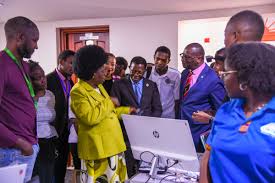
The breakthrough follows a recent State House meeting in Entebbe attended by Starlink executives, Uganda’s UN ambassador Adonia Ayebare, and senior officials from the Ministry of ICT and the Uganda Communications Commission (UCC).
This meeting was a follow-up to an earlier engagement in December, when Museveni welcomed Starlink’s interest in Uganda after meeting representatives Ben MacWilliams and Brandi Oliver.
“I appreciate their commitment to providing low-cost internet in hard-to-reach areas and establishing a presence in Uganda,” Museveni said at the time, emphasizing that Starlink was welcome to operate in the country.
During the latest meeting, the President directed the ICT ministry to facilitate Starlink’s entry and ensure the company is granted an operating license, sources said.
Licensing Dispute
The negotiations have centered on licensing fees and classification. Initially, UCC required Starlink to pay over $20 million for a national telecommunications operator license, similar to traditional telecom firms that provide voice, data, and mobile money services.
“Starlink argued it should not be treated as a full telecom operator because it only provides data services,” a source said.
Under the emerging framework, Starlink is expected to operate independently under a revised licensing structure, potentially creating a new category for satellite internet providers.
The company has also indicated plans to wholesale bandwidth to local telecom operators, opening opportunities for collaboration rather than direct competition.
Security and Regulatory Assurances
Government concerns over communication control during politically sensitive periods were also addressed. Uganda has historically ordered internet shutdowns during elections and unrest, prompting questions about satellite networks bypassing terrestrial infrastructure.
Starlink assured authorities it would establish local offices and ground infrastructure to remain responsive to regulatory and security requirements.
The agreement also includes commitments from Starlink to pay taxes in Uganda, create local jobs, and support innovation ecosystems, including digital startups and connectivity-driven services.
The company aims to provide nationwide coverage, targeting underserved regions and critical sectors such as healthcare, education, and tourism.
Transforming Uganda’s Internet Landscape
Internet penetration in Uganda remains around 30% of the population, often hindered by high costs and patchy infrastructure. Policymakers see satellite broadband as a complement to fiber and mobile networks, particularly in rural and hard-to-reach areas.
Starlink has pledged competitive pricing, with African prices typically ranging from $10 to $50 per month, plus hardware costs of $200–$400.
Uganda would join other African nations, including Kenya, Rwanda, and Nigeria, in licensing or negotiating with Starlink as part of broader digital transformation strategies.
Officials said the agreement reflects a balance between national security oversight and the push for universal connectivity, adapting regulatory frameworks for rapidly evolving space-based technologies.