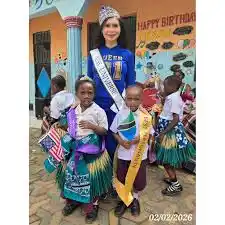
On a warm day in Chanika, Dar es Salaam, Victoria Nguyen stood among a group of eager students, sharing stories that stretched far beyond the classroom walls. Her presence was more than a visit—it was a reminder of something powerful: that travel has a unique ability to connect people in ways politics often cannot.
In a world frequently divided by policies, borders, and ideologies, human connection can sometimes feel distant. Political differences may shape narratives, but they rarely capture the full depth of shared human experience. Travel, however, tells a different story. It brings people face-to-face, allowing them to see one another not as representatives of opposing sides, but as individuals with stories, dreams, and common ground.
Victoria’s journey to Tanzania reflects this idea. By stepping into a new environment, she became part of a cultural exchange that no formal negotiation could replicate. The students she met were not just observers—they were participants in a moment of mutual discovery. Through conversation, laughter, and curiosity, barriers quietly dissolved.
This is the quiet strength of travel. It does not argue or impose; it reveals. It allows people to experience cultures directly, to challenge assumptions, and to build understanding through real encounters rather than distant perceptions. Where political dialogue can become tense or rigid, travel remains fluid and personal.
At its core, travel fosters empathy. It reminds us that despite differences in language, geography, or governance, people share similar hopes for connection, opportunity, and understanding. These shared experiences create bonds that no policy alone can achieve.
In a time when divisions often dominate headlines, stories like Victoria’s offer a different perspective—one where unity is not negotiated but naturally formed through shared experience. Travel, in its simplest form, becomes a bridge, quietly connecting worlds that politics sometimes keeps apart.