In today’s digital age, conflict—whether on the battlefield or in political arenas—has taken on a new and unsettling dimension. From real-time war coverage to heated political exchanges online, the constant flow of information can be both captivating and dangerously misleading.
Across Kenya, the rapid spread of digital content—ranging from breaking news to political commentary—has created an environment where misinformation thrives. Emotional reactions often replace critical thinking, and narratives driven by bias or manipulation can easily shape public perception.
Research by the African Centre for Strategic Studies highlights the growing influence of foreign information manipulation across the continent. Yet, Kenya presents a unique challenge: a significant portion of misleading content is generated and amplified locally, deepening societal divisions and eroding trust.
With the rise of artificial intelligence, the situation has become even more complex. Highly convincing fake images, audio clips, and videos can now be created with ease, making it increasingly difficult for the average person to distinguish truth from fabrication.
While traditional media—radio, television, and newspapers—continues to command trust, it faces mounting competition from social media platforms. These platforms excel in speed and accessibility but are highly vulnerable to misuse, often prioritizing virality over accuracy.
As Kenya approaches the 2027 general elections, the risks associated with misinformation are especially concerning. The growing “post-truth” environment—where emotions and personal beliefs outweigh objective facts—poses a direct threat to informed civic participation and democratic stability.
Global conflicts, from the Middle East to Eastern Europe and South America, have also fueled polarized thinking. Online discourse increasingly reduces complex issues into simplistic “us versus them” narratives, mirroring the intensity of sports rivalries but with far more serious consequences.
In some cases, such polarization has escalated into real-world harm, including violence. Yet, society often fails to reflect on these warning signs until tensions spiral into broader crises.
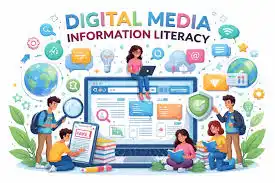
To address this, Kenyans must urgently adopt Media and Information Literacy (MIL) as a core digital skill. Such literacy would empower individuals to critically evaluate online content, understand its context, and identify potential manipulation.
Equally important is the ability to navigate the overwhelming volume of information online. Many users remain unaware of algorithm-driven “filter bubbles” that reinforce existing beliefs while limiting exposure to diverse perspectives.
Addressing this challenge requires a collective effort. Both traditional and digital media stakeholders must work together to promote responsible content consumption. Encouraging habits such as fact-checking, questioning sources, and recognizing AI-generated material is essential.
Ultimately, Media and Information Literacy goes beyond identifying false information—it fosters critical thinking, ethical engagement, and informed decision-making. These skills are vital not only for navigating the digital landscape but also for strengthening democracy.
As Kenya moves closer to 2027, the need for a digitally literate society has never been more urgent. Without it, the country risks falling deeper into cycles of misinformation, division, and instability.