Pope Leo XIV has officially moved into the papal apartment inside the Apostolic Palace at the Vatican City, marking a return to a long-standing papal tradition that had been set aside by his predecessor.
The newly elected pontiff took residence in the third-floor apartment overlooking St. Peter’s Square after a 10-month renovation project that upgraded the building’s electrical, plumbing, and structural systems. The Vatican confirmed that Leo will share the residence with several of his closest aides.
The apartment had remained unused throughout the 12-year papacy of Pope Francis, who famously chose to live elsewhere instead of the grand papal residence. Francis preferred a simpler lifestyle and opted to stay at the Domus Sanctae Marthae (often called the Santa Marta residence), a Vatican guesthouse typically used by visiting priests and cardinals during papal conclaves.
Francis said he preferred being surrounded by others rather than living in the more isolated palace apartments. As a result, an entire floor of the residence was set aside for his use during his pontificate.
Before Leo moved in, the papal apartment had been sealed according to Vatican protocol following Francis’ death on April 21, 2025. Although Francis died in his room at Santa Marta, the traditional residence was symbolically closed with a red ribbon and wax seal.
Since his election in May 2025, Pope Leo XIV had been living in a modest apartment inside the Palazzo del Sant’Uffizio, which houses offices connected to the Vatican’s doctrinal administration.
His decision to relocate to the Apostolic Palace signals a return to more traditional papal practices. The move has drawn attention from observers and commentators, particularly those who view the use of the historic residence as a reaffirmation of the symbolic traditions of the papacy.
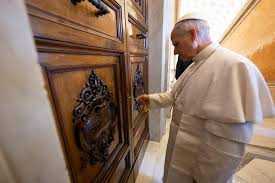
Shortly after his election, Leo visited the apartment to formally take possession of the residence. The suite includes several reception rooms and a private chapel reserved for the pope’s personal prayer and reflection.
The transition highlights a subtle shift in style between the two pontificates. While Pope Francis became known for rejecting many of the traditional trappings associated with the papal office, Pope Leo XIV has indicated greater comfort with the customary vestments, symbols, and residences historically linked to the role.