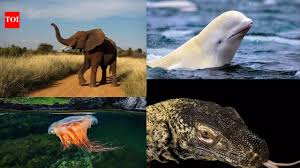
The planet is home to some truly extraordinary creatures—giants that stretch the imagination and show the incredible diversity of life. From oceans to land, these titans rival the size of a bus and beyond.
1. Blue Whale
Length: Up to 30 meters
Weight: Up to 200 tonnes (equivalent to 33 elephants)
Fact: The largest creature to have ever lived dominates the oceans with sheer size and power.
2. Lion’s Mane Jellyfish
Tentacle length: Up to 36 meters
Fact: Earth’s longest animal in terms of tentacle reach, its flowing, stinging tentacles are longer than a basketball court.
3. African Bush Elephant
Height: Up to 4 meters
Weight: 6 tonnes
Fact: Africa’s largest land animal with iconic tusks and trunk, shaping landscapes and ecosystems.
4. Komodo Dragon
Length: Up to 3 meters
Weight: Over 150 kilograms
Fact: The heaviest lizard on Earth, prowling Indonesia with prehistoric presence.
5. Giant Manta Ray
Wingspan: Up to 8 meters
Weight: Over 2,200 kg
Fact: Graceful ocean gliders with unique belly patterns, inspiring awe with their enormous “blanket-like” wings.
6. Great White Shark
Length: 4–6 meters
Fact: The apex predator of the seas, feared and admired for its power and predatory efficiency.
7. American Alligator
Length: 3–5 meters
Weight: 227–272 kg (male average)
Fact: Survivors of near-extinction, these reptiles are powerful, ancient predators in North American waters.
8. Galápagos Giant Tortoise
Length: Over 1.5 meters
Weight: 500+ pounds
Fact: Long-lived land giants, with lifespans exceeding 100 years, once so abundant they inspired the naming of the Galápagos Islands.
9. North Atlantic Right Whale
Length: Up to 15.8 meters
Fact: Rare and gentle giants, identifiable by unique skin callosities, symbolizing the fragility of the ocean’s largest mammals.
These awe-inspiring animals remind us that nature’s scale can be as dramatic as it is beautiful, and that Earth’s ecosystems are home to giants that capture the imagination while highlighting the importance of conservation.