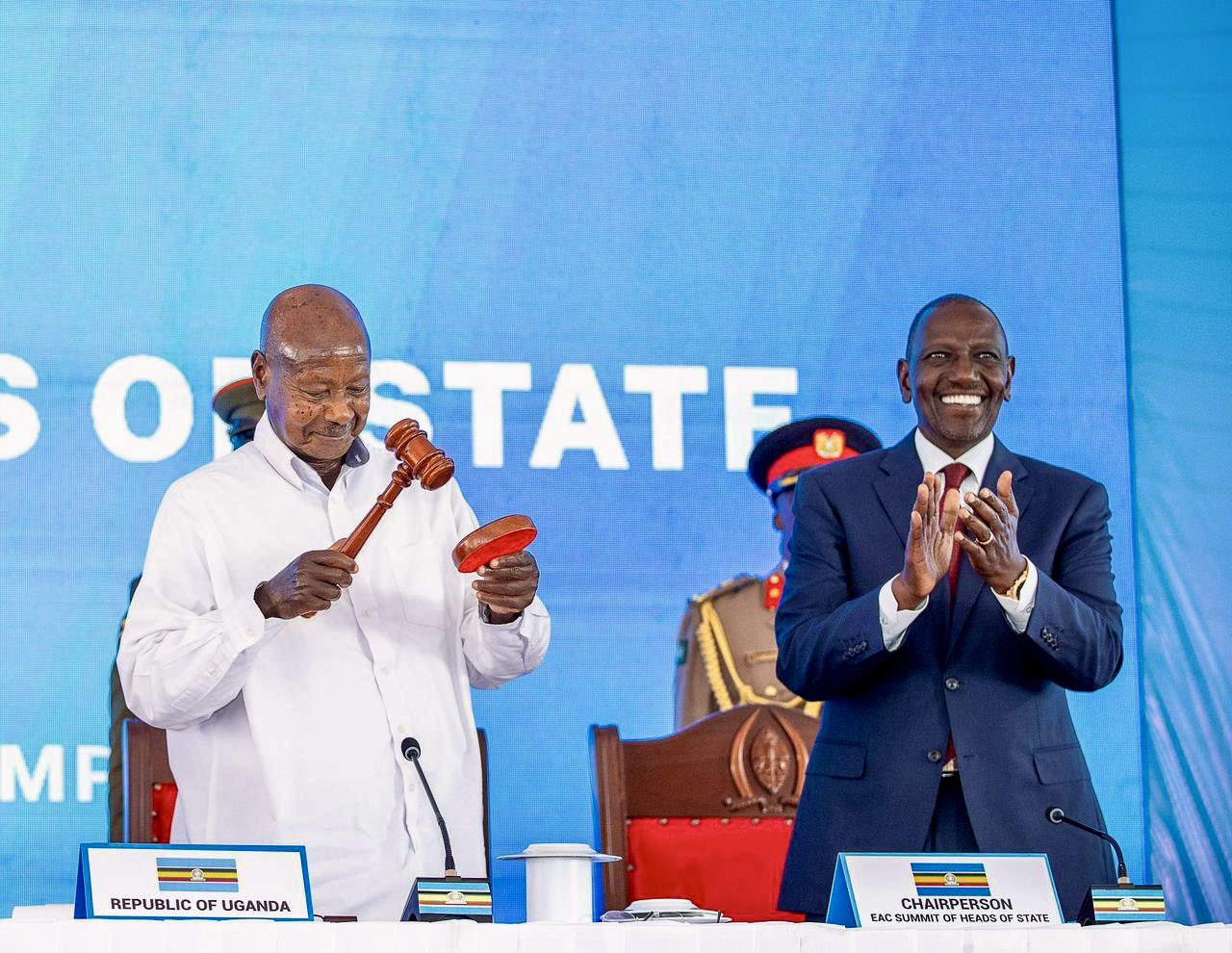
Leaders of the East African Community (EAC) have elected Uganda’s President Yoweri Kaguta Museveni as the new Chairperson of the EAC Summit of Heads of State.
President Museveni takes over the rotational leadership position from Kenya’s President William Ruto, who has served as chairperson since November 2024.
The leadership transition was confirmed on March 7, 2026, during the 25th Ordinary Summit of EAC Heads of State held in Arusha, the headquarters of the regional bloc.
Under the EAC’s rotational leadership arrangement, President Museveni will serve as chairperson for one year, from March 2026 to March 2027. In this role, he will guide discussions among partner states and oversee efforts aimed at strengthening regional cooperation and integration.
The EAC currently comprises eight partner states:
Uganda, Kenya, Tanzania, Rwanda, Burundi, South Sudan, Democratic Republic of the Congo, and Somalia.
President Museveni assumes leadership at a time when the regional community is confronting serious financial pressures.
The EAC is currently dealing with a financial crisis, with outstanding arrears in statutory contributions estimated at nearly $89 million. Several member states particularly the Democratic Republic of the Congo, Burundi, South Sudan and Somalia have fallen behind on their financial obligations.
These delays have affected the bloc’s ability to finance salaries and support core operational activities, placing additional pressure on the regional organization.
Beyond financial challenges, security issues remain a key concern, especially the ongoing conflict in eastern Democratic Republic of the Congo.
The EAC has been working closely with the African Union to support initiatives aimed at restoring stability and peace in the troubled region.
As the new chairperson, President Museveni is expected to provide strategic leadership to the regional bloc, helping to address financial constraints, strengthen cooperation among member states, and advance the goals of regional integration, peace and economic development within the East African Community.
His leadership will also play a crucial role in coordinating regional responses to security challenges and ensuring that the EAC continues to function effectively despite ongoing financial and geopolitical pressures.