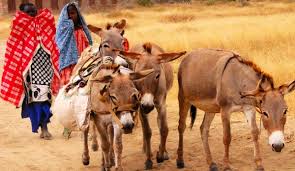
ARUSHA – Tanzania is preparing to include donkeys in its ongoing national livestock identification, vaccination, and census exercise, following calls from animal welfare groups to recognize the important role the animals play in rural communities.
The nationwide campaign, led by the Ministry of Livestock and Fisheries, is currently registering and vaccinating cattle, goats, and sheep while updating official livestock data. However, authorities now say donkeys will also be considered for inclusion.
Dr. Justine Kimanga, a veterinary official from the Northern Zone, said the government received formal proposals from the Arusha Society for the Protection of Animals (ASPA) urging authorities to stop sidelining donkeys in national animal welfare programmes.
Donkeys Often Overlooked
According to ASPA veterinary officer Dr. Lazaro Mirama, donkeys have historically been excluded from key services such as vaccination drives, census exercises, and legal protection measures.
He explained that despite their major contribution to rural transport and farming activities, donkeys have not received equal attention compared to other livestock.
“Donkeys are very important for rural families, especially for transport and income generation, yet they are often forgotten in national programmes,” he said during a recent media engagement in Arusha.
Government Response and Protection Measures
In response, Dr. Kimanga confirmed that the government is now taking the issue seriously. She noted that Tanzania has already banned the slaughter, transportation, and smuggling of donkeys to protect the animals from illegal trade.
She added that veterinary officers have been stationed at border entry and exit points to enforce the ban and safeguard donkey welfare. Authorities now plan to extend vaccination and identification services to include donkeys in the current national exercise.
Smuggling Still a Concern
ASPA Director Livingstone Masija welcomed the government’s move but warned that donkey smuggling remains a challenge. He said that although protection efforts are in place, cases of mistreatment and illegal trade are still being reported.
Masija stressed that more than 70 percent of Tanzania’s rural population depends on donkeys for transport, farming, and small-scale business activities. He called for stronger enforcement and better animal handling practices.
Need for Updated Data
The last official count of donkeys was conducted during the 2019/2020 financial year, when the population was estimated at 657,389. Since then, no updated national data has been released.
Animal welfare experts are now urging the government to carry out a fresh census to determine the current donkey population and ensure they are fully integrated into national livestock policies.
If implemented, the move will mark a significant step toward recognizing donkeys as an essential part of Tanzania’s agricultural and rural economy.