In the fertile heart of Uganda, where rolling hills descend gently toward the vast waters of Lake Victoria, lies Buganda — the historic homeland of the Baganda people. It is here that one of East Africa’s most organized and enduring kingdoms was born.
The story of the Baganda begins not with written records, but with legend.
According to oral tradition, the first man, Kintu, arrived in Buganda and married Nambi, daughter of the creator god Ggulu. Kintu became the first Kabaka (king), establishing the royal lineage that would define Buganda’s identity for centuries. While historians trace the formation of the Buganda Kingdom to around the 14th century, the legend of Kintu remains the spiritual foundation of Ganda identity — a bridge between myth and political history.
Migration and Formation of the Kingdom
Scholars believe that the Baganda are part of the larger Bantu migrations that moved into the Great Lakes region between 1000 and 1500 AD. These early communities brought iron-working skills, banana cultivation, and centralized governance systems that allowed settlements to expand rapidly.
Over time, Buganda evolved into a highly centralized monarchy under the leadership of the Kabaka. Unlike many neighboring societies, Buganda developed:
A well-structured administrative system
A standing army and naval force on Lake Victoria
A powerful clan system (over 50 clans)
A hierarchical but organized political structure
By the 18th and 19th centuries, Buganda had become the most dominant kingdom in the region, expanding its influence through trade, diplomacy, and military strength.
The Baganda Today: Population and Presence
Today, the Baganda are the largest ethnic group in Uganda, making up approximately 16–17% of the national population. With Uganda’s population exceeding 45 million people, this places the Baganda at roughly 7 to 8 million individuals.
They primarily inhabit the central region of Uganda, especially in and around Kampala, which historically developed within Buganda territory.
Their language, Luganda, has become one of the most widely spoken local languages in Uganda and serves as a lingua franca in many urban areas.
The arrival of Arab traders in the 19th century introduced Islam, followed by Christian missionaries. Soon after, British colonial administrators arrived.
In 1900, the Buganda Agreement formalized Buganda’s relationship with the British Protectorate. The agreement strengthened the Kabaka’s authority locally while integrating Buganda into the colonial state.
However, colonial rule also reshaped power structures and planted seeds of political tension between Buganda and the broader Ugandan state — tensions that would continue after independence in 1962.
In 1966, Uganda’s central government abolished traditional kingdoms, including Buganda. But in 1993, the monarchy was restored as a cultural institution under Kabaka Ronald Muwenda Mutebi II, symbolizing resilience and continuity.
What Was Missing in the Story
For many years, the story of the Baganda was simplified into one of political dominance. But what is often missing are the deeper cultural foundations that sustained Buganda:
1. The Clan System
Buganda’s social organization rests on clans (ebika), each with totems, responsibilities, and ancestral roots. Clans ensure social cohesion and identity beyond political leadership.
2. Agricultural Innovation
The Baganda mastered banana cultivation (matooke), which became a dietary staple and economic backbone. Their farming systems supported dense populations long before colonial influence.
3. Diplomacy Over Conquest
While militarily strong, Buganda often expanded influence through strategic alliances and diplomacy — a factor that helped it negotiate relatively favorable colonial agreements.
4. Cultural Sophistication
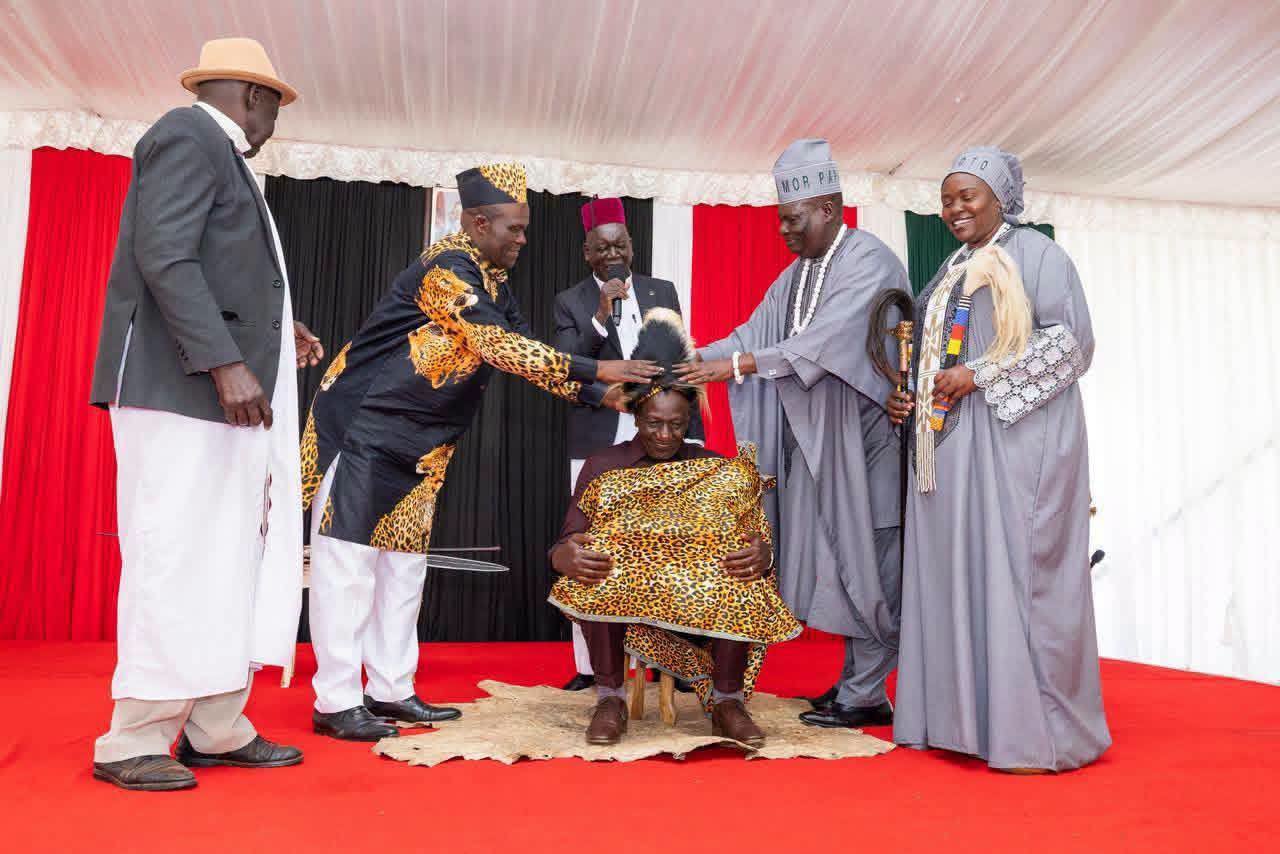
From bark cloth production to royal drum regalia, from elaborate coronation rituals to refined court etiquette, Buganda developed a highly symbolic and artistic court culture.
Modern Influence in Uganda
Because of their population size and historic organization, the Baganda continue to play a significant role in Uganda’s social, economic, and political life:
Luganda media houses dominate central Uganda’s broadcasting space
Kampala, within Buganda territory, is Uganda’s economic hub
Many national institutions trace their roots to Buganda-era administration
The Buganda Kingdom operates cultural, educational, and development programs
The kingdom today functions as a cultural institution rather than a political state, yet its symbolic influence remains profound.
A Living Kingdom
The Baganda story is not frozen in the past. It is carried in the rhythm of royal drums, in the respectful kneeling of subjects before their Kabaka, in the gomesi worn proudly at ceremonies, and in the Luganda language spoken across markets and cities.
From the legend of Kintu to the modern skyline of Kampala, Buganda’s journey reflects adaptation, negotiation, resilience, and cultural continuity.
The Baganda are not merely the largest ethnic group in Uganda —
They are the architects of one of Africa’s most enduring kingdoms.
A people shaped by myth, strengthened by structure, and sustained by identity.
And in the hills of central Uganda, their story continues to unfold.