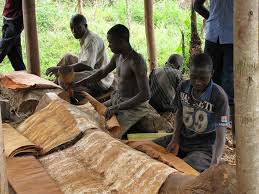
KAMPALA — A quiet but powerful cultural revival is unfolding in Uganda’s capital, as artisans gather at the National Theatre to preserve and promote the centuries-old tradition of barkcloth-making.
At the heart of this movement is Samula Peter Katamiira, a master craftsman from Bukomansimbi who has practised the art for 37 years. Having learned the skill from his father at just six years old, Katamiira has dedicated his life to refining and safeguarding the authentic Ugandan method of producing barkcloth.
Using traditional tools inherited from his father, he continues to demonstrate techniques that have been passed down through generations. Beyond sustaining his family, the craft has taken him across the world — including the United States, Cameroon, and Nigeria — where he teaches Uganda’s unique barkcloth-making process.
Despite attempts by other countries to replicate barkcloth using their own fig trees, Katamiira maintains that the quality of Uganda’s original product remains unmatched.
A Tradition Under Threat
Like many indigenous crafts, barkcloth-making faces challenges. The number of skilled artisans is shrinking, and some members of the public regard the material as outdated. Others undervalue its cultural and economic significance.
To counter this decline, artists convene annually at the National Theatre to teach urban residents the step-by-step process of harvesting and crafting barkcloth.
Seven years ago, a mutuba tree (traditionally used for barkcloth production) was planted at the theatre grounds for demonstration purposes. The tree belongs to the Nsole clan and has since become central to hands-on training sessions.
The tree was planted by cultural enthusiast and artist Owek. Noah Wamala Nnyanzi of Nnyanzi Art Studio. Initially intended to provide shade, the tree later inspired Nnyanzi to explore barkcloth production more deeply after a friend admired its maturity and encouraged him to harvest from it.
For the past four years, Nnyanzi has used bark harvested from the tree to create artistic and functional products, including handbags, hats, cosmetic holders, and other modern innovations.
Preserving Identity for Future Generations
Nnyanzi says his mission is to preserve cultural knowledge and ensure that young Ugandans understand the roots of their heritage. Although he has faced challenges protecting the tree from vandals, he insists that safeguarding the craft is worth the effort.
With growing creativity and renewed interest in cultural identity, Kampala’s barkcloth revival is gaining momentum. The movement not only preserves Uganda’s rich cultural heritage but also opens up economic opportunities for artisans in a modern market.
As artists continue to innovate while honoring tradition, barkcloth stands as a powerful symbol of Uganda’s enduring cultural pride.