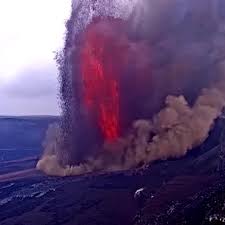
Kilauea volcano in Hawaii erupted on Sunday, putting on a dramatic display of lava fountains, ash and thick smoke rising high into the sky.
According to the United States Geological Survey (USGS), the eruption began at about 1:50 p.m. local time (2350 GMT). This was the volcano’s 42nd episode of lava fountaining since the current phase of activity started.
The National Weather Service reported that the ash plume from the eruption reached up to 35,000 feet above sea level, creating a striking but potentially hazardous scene.
Ongoing Activity Since 2024
Scientists say Kilauea has been erupting on and off since December 23, 2024. Most of the recent activity has been happening inside the Halemaʻumaʻu crater, where lava has been coming out from two main vents — one in the north and another in the south.
Kilauea is located within Hawaii Volcanoes National Park and is one of the most active volcanoes in the world. Because of its frequent eruptions, it is closely monitored by scientists to ensure public safety.
Safety and Monitoring,
Authorities have not reported any immediate injuries or major damage from the latest eruption. However, volcanic ash can affect air quality and aviation, and residents are usually advised to stay informed through official updates.
USGS experts continue to monitor seismic activity, gas emissions and lava flows around the volcano. They say intermittent eruptions are common for Kilauea and can last for weeks or even months.
Despite the risks, the eruption has drawn attention from visitors and photographers eager to witness the natural spectacle. Officials, however, remind the public to observe from safe distances and follow all safety guidelines.
Kilauea’s latest eruption once again highlights the powerful natural forces shaping the Hawaiian Islands — a reminder of both the beauty and danger of living near one of the world’s most active volcanoes.