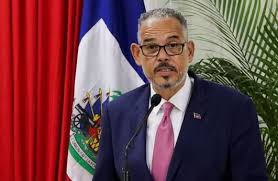
Haiti’s Presidential Transitional Council has officially handed over power to Prime Minister Alix Didier Fils-Aime, ending nearly two years of interim rule in a country struggling with extreme violence and political instability.
The handover ceremony took place on Saturday in Port-au-Prince under heavy security, reflecting the fragile situation in the Caribbean nation. The nine-member council was created in April 2024 after Haiti was left without elected leadership, but it failed to stop the rapid spread of gang violence.
Speaking at the ceremony, council president Laurent Saint-Cyr told the prime minister that Haiti’s priorities must now be security, political dialogue, elections, and stability. With the transition complete, Fils-Aime is now the only official holding executive power in the country.
A country without elections or a president
Haiti has not held elections since 2016, and the country has been without a president since July 2021, when President Jovenel Moïse was assassinated in his home. Since then, repeated delays, political disagreements, and insecurity have prevented a return to democratic rule.
Fils-Aime, a 54-year-old businessman, now faces the difficult task of restoring order and preparing for long-delayed elections in a deeply divided political environment.
Gangs tighten grip on the capital
Haiti is currently facing one of the worst security crises in its history. Armed gangs control about 90 percent of Port-au-Prince, the capital, according to the United Nations. In 2025 alone, nearly 6,000 people were killed as a result of gang violence, which includes murders, kidnappings, and sexual assaults.
The violence has forced around 1.4 million people to flee their homes, while almost half of the population is facing serious food shortages. Among them are 1.2 million children under the age of five, many of whom are at risk of malnutrition.
Strong US backing
Amid fears of a power vacuum, the United States has openly backed Prime Minister Fils-Aime. This week, Washington sent three warships to Haiti as a show of support.
US Secretary of State Marco Rubio said Fils-Aime’s continued leadership is critical to fighting what he described as “terrorist gangs” and stabilising the country. The US has also imposed sanctions on two former council members and one minister, accusing them of supporting criminal gangs.
Security operations continue
Meanwhile, Haitian police have launched a large-scale operation against gangs in central Port-au-Prince. During the offensive, authorities destroyed a house belonging to Jimmy Cherizier, also known as “Barbecue”, one of the country’s most feared gang leaders.
What lies ahead
The transition marks a key moment for Haiti, but major challenges remain. Prime Minister Fils-Aime must restore security, unite political factions, and organise elections — all while violence, poverty, and displacement continue to worsen.
Many Haitians hope the new leadership will finally bring stability, but the road ahead remains uncertain.