The United States military will now focus more on defending the homeland and countering China, while reducing its support to allies in Europe and other regions. This change is outlined in the 2026 National Defense Strategy (NDS) released by the Pentagon on Friday.
According to the new strategy, US allies will be expected to take greater responsibility for their own security, with America offering only limited support. The document says US forces will concentrate mainly on homeland defense and the Indo-Pacific region, where China is seen as the main challenge.
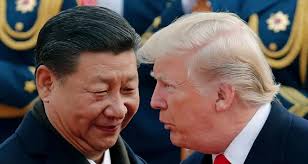
This marks a clear shift from the previous defense strategy under former President Joe Biden. Biden’s administration described China as the biggest global threat and Russia as an urgent danger. In contrast, the new strategy under President Donald Trump calls for “respectful relations” with China and describes Russia as a “manageable” threat, especially to NATO’s eastern members. The document does not mention Taiwan, a key US ally claimed by China.
The strategy strongly links border security to national security. It criticizes the previous administration for what it calls weak border controls, blaming them for illegal immigration and drug trafficking. The Pentagon says it will help seal borders, stop illegal crossings, and support deportations.
Unlike past strategies, the 2026 NDS does not mention climate change as a security threat. Instead, it places new emphasis on Latin America, describing it as a priority region. The document refers to this approach as the “Trump Corollary to the Monroe Doctrine,” meaning the US intends to block rival powers from gaining influence in the region.
Since returning to office, President Trump has ordered military operations in Latin America, including a raid that captured Venezuelan leader Nicolas Maduro and attacks on boats suspected of drug trafficking. However, rights groups and legal experts have raised concerns, saying there is no clear proof the targeted vessels posed a direct threat and warning that the actions may violate international law.
Overall, the new defense strategy signals a major change in US military policy, with less global involvement, more pressure on allies, and a sharper focus on homeland security and competition with China.