Kenya spends an estimated Ksh.4.3 billion annually treating diseases linked to unclean water and poor sanitation, while losing a further Ksh.2.1 billion in productivity as illness keeps people out of work, government officials have revealed.
The figures were disclosed by Dr. Mary Muthoni, Principal Secretary in the State Department for Public Health and Professional Standards, during a Water, Sanitation and Hygiene (WASH) stakeholder engagement held alongside the launch of SaniBook, a new digital sanitation platform.
SaniBook is a comprehensive digital publication and knowledge platform designed to promote smarter sanitation solutions and support Kenya’s efforts to achieve Sustainable Development Goal (SDG) 6.2, which calls for access to adequate sanitation and hygiene for all by 2030.
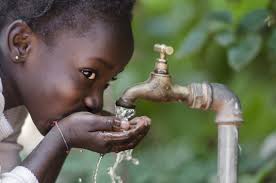
Dr. Muthoni noted that unsafe water, poor sanitation and hygiene are responsible for approximately 1.4 million deaths globally each year, with Kenya accounting for nearly 20,000 deaths annually.
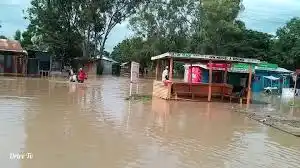
“These are not just statistics; they reflect a harsh reality,” she said. “When sewage flows into drains and rivers, it pollutes the environment, contaminates water sources and manifests quickly as cholera, diarrhoea and worm infections.”
She added that addressing sanitation challenges is not only a public health issue but also an economic and environmental imperative.
Challenges with pilot projects
Speaking at the same event, Thomas Odongo, Chairman of the Water and Sanitation Providers Association (WASPA), observed that while Kenya has implemented numerous sanitation pilot projects, many fail to progress beyond the pilot phase.
“We have a lot of pilots in sanitation, but they often end there, mainly due to funding challenges and lack of sustainability,” Odongo said. “In many cases, communities are not sufficiently engaged, which limits long-term impact.”
He also pointed to gaps in data availability and consistency within the sector, noting that such challenges hinder informed decision-making and scaling of successful interventions.
“With a digital tool like SaniBook, we can track progress, make corrections, scale solutions and promote sustainable innovations,” he added.
From isolated projects to national systems
Elizabeth Wamboi Mwangi, WaSHVoice Program Director, described SaniBook as a premier knowledge management tool aimed at transforming fragmented sanitation initiatives into evidence-based national systems.
She said the platform would help shift the sector away from trial-and-error approaches toward informed planning based on verified data and shared learning.
Also present at the launch was Eng. Festus Ng’eno, Principal Secretary in the Ministry of Environment and Climate Change, who welcomed the platform’s potential role in addressing climate change challenges within the water sector.
“For my State Department, this tool consolidates fragmented efforts into a unified resource that will actively shape national strategies and work plans,” Ng’eno said. “I am particularly impressed that the first edition of SaniBook confronts hard truths by identifying seven sanitation bottlenecks that have historically hindered progress.”
A central hub for WASH solutions
SaniBook brings together scattered information on water, sanitation and hygiene from research institutions, as well as public and private sector actors across Kenya. The platform is expected to improve project tracking, enable comparison of interventions, and support the scaling of successful sanitation solutions.
Ultimately, the digital platform is intended to help WASH stakeholders identify what works, address existing gaps, and ensure resources are channelled toward interventions that deliver the greatest impact for communities across the country.