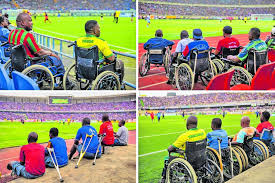
Despite heavy investment in modern stadiums across East Africa, many facilities are still being built without fully considering the needs of persons with disabilities, raising concerns about inclusion and equal access.
Across the region, governments have invested billions of shillings in new and renovated stadiums to host international sports events, concerts and national celebrations. However, disability rights activists and experts say that accessibility is often treated as an afterthought, rather than a core part of design and construction.
Many stadiums lack ramps, lifts, accessible seating, clear signage, adapted toilets and safe walkways for people using wheelchairs, crutches or with visual and hearing impairments. In some cases, facilities labelled as “accessible” are difficult to use, poorly located, or unsafe.
Advocates argue that this exclusion contradicts national laws and international commitments, including the UN Convention on the Rights of Persons with Disabilities, which requires public infrastructure to be accessible to all. They say stadiums, as public spaces funded by taxpayers, should reflect the needs of every citizen.
Experts point to several reasons for the problem. These include poor enforcement of building standards, limited consultation with disability groups during planning, cost-cutting by contractors, and lack of awareness among designers and engineers. In some projects, accessibility features are removed to save money or added too late to be effective.
Persons with disabilities say the impact goes beyond inconvenience. Being unable to access stadiums means missing out on sports, entertainment, jobs and social life, reinforcing exclusion in public life.
Civil society groups are now calling on governments, sports authorities and contractors to involve persons with disabilities from the design stage, strictly enforce building codes, and carry out accessibility audits before stadiums are approved for use.
As countries push to host more international events, campaigners warn that modern stadiums should not only be big and beautiful, but also inclusive, ensuring that no citizen is left behind.