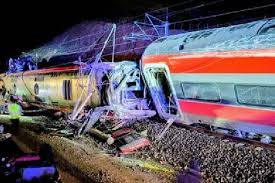
Cordoba, Spain — A devastating high-speed train crash in southern Spain on Sunday, January 18, 2026, has claimed the lives of at least 21 people and left dozens more injured. The collision occurred near Adamuz, in the province of Cordoba, around 360 km south of Madrid, when a high-speed train derailed and collided with an oncoming train.
The accident took place at 7:45 p.m. (1845 GMT) when the Iryo-operated train, traveling from Malaga to Madrid, derailed and veered into the path of a Renfe-operated train headed to Huelva. The impact pushed the Renfe train off the tracks and down a railway embankment.
Casualties and Injuries
The crash resulted in the deaths of at least 21 people, with many others seriously injured. Authorities reported that 75 people were hospitalized, 15 of whom are in critical condition. As of Monday morning, officials warned that the death toll could rise as rescue operations continue. “The force of the crash was overwhelming. We expect the number of casualties to increase,” said Juanma Moreno, the chief of Andalucia’s regional government.
Horrific Scenes and Rescue Operations
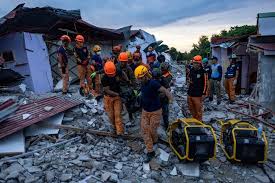
Video footage from the scene, shared on social media, showed emergency workers pulling survivors from the wreckage, which included twisted carriages and scattered luggage. Some passengers were seen climbing out of smashed windows, while others were rushed to ambulances on stretchers.
Among the dead was the 27-year-old driver of the Renfe train, who was operating the train traveling from Madrid to Huelva. He was reportedly among those killed in the crash.
Rescue workers are still working to free passengers trapped in the wreckage, with firefighters noting that the Renfe train’s carriages were particularly difficult to access due to twisted metal and debris. Paco Carmona, the fire chief in Cordoba, told TVE, “The Iryo train was evacuated relatively quickly, but the Renfe carriages are still heavily damaged. We are doing everything we can to save anyone still trapped.”
Possible Cause of the Collision
The cause of the derailment remains unclear. Spanish Transport Minister Oscar Puente expressed his surprise at the incident, noting that it occurred on a straight stretch of track that was recently renovated in May. “It’s really strange that a derailment occurred on such a well-maintained section of track,” Puente said in a press conference.
The Spanish government has promised a full investigation into the crash, with Prime Minister Pedro Sanchez expressing deep sorrow over the tragedy. “Tonight is a night of deep pain for our country,” he said in a statement on social media.
A Horrific Scene
The scene at the crash site has been described as horrific. Adamuz Mayor Rafael Moreno was one of the first responders to the area and described seeing a body several meters from the accident site. “The scene is truly devastating. It’s unclear whether both trains were on the same track, but there is no doubt that this is one of the worst accidents we have ever seen,” he said.
Local residents of Adamuz, a small town with a population of about 5,000, quickly mobilized to assist the victims, bringing food and blankets to a temporary reception center set up for survivors.
Impact on Spain’s Rail Network
Following the collision, Spain’s national rail operator, Adif, suspended all rail services between Madrid and Andalucia. The Iryo train involved in the crash was a Freccia 1000 model, operated by the private Italian railway group Ferrovie dello Stato. A spokesperson for Iryo expressed condolences for the victims and confirmed that all emergency protocols were activated.
Renfe, the state-funded operator, also expressed its regret over the tragedy, confirming that the crash occurred when the Iryo train derailed into the Renfe train’s path.
The Aftermath
As rescue and recovery efforts continue, the focus remains on finding and assisting any survivors trapped in the wreckage. Spain’s rail network is already facing scrutiny over safety protocols, and the investigation into the cause of the collision will likely lead to calls for further improvements to ensure such a tragedy never occurs again.