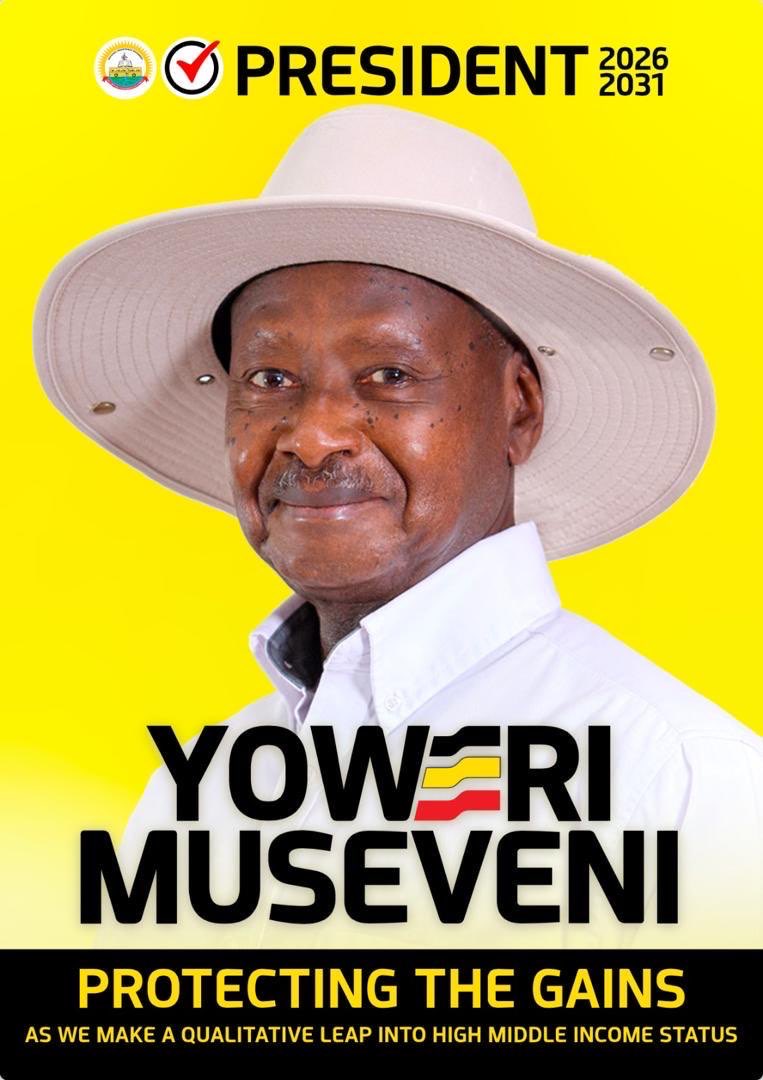
When Uganda’s Electoral Commission announced the final presidential results, the margin told a deeper story than numbers alone. President Yoweri Kaguta Museveni had secured 71.65 percent of the national vote, while his closest challenger, Robert Kyagulanyi—popularly known as Bobi Wine—finished with 24.72 percent.
To casual observers, the outcome appeared puzzling. Bobi Wine’s rallies were massive, his online presence overwhelming, and his message electrified a generation. Yet on election day, it was Museveni who converted political presence into decisive national victory.
The Power of Organization Over Momentum
Museveni’s win was built on something less glamorous than packed stadiums or viral videos: structure. The National Resistance Movement (NRM) operates the most extensive political network in Uganda’s history—stretching from the national headquarters down to villages, parishes, and polling stations.
Every layer of this structure had a defined role. Local leaders mobilized voters, followed up households, arranged transport for elderly voters, and ensured polling agents were present across the country. This organization did not begin during the campaign period; it had been built and maintained over decades. On voting day, turnout in NRM strongholds was not accidental—it was planned.
A Message Designed for the Majority
Museveni’s campaign message was deliberately simple and consistent. Rather than focusing on dramatic change, he emphasized stability, security, and continuity. His message highlighted achievements in peace, infrastructure, electricity expansion, education access, and agricultural support.
Programs such as wealth creation initiatives and rural development schemes were repeatedly referenced as tangible evidence of progress. For many voters—especially in rural Uganda—these messages resonated more than abstract promises of reform. They spoke to lived experience. The campaign did not rely on inspiration alone; it relied on reassurance.
Bobi Wine’s Strength—and Its Limits
Bobi Wine’s 24.72 percent reflected genuine national support, particularly among young people and urban voters. His campaign energized first-time voters and reshaped Uganda’s opposition politics. However, enthusiasm did not consistently translate into votes.
In several areas, weak grassroots coordination, limited polling-day logistics, and low turnout among youthful supporters reduced his impact. Many supporters were loud online but absent at polling stations. In contrast, Museveni’s base—older, rural, and disciplined—turned out in large numbers.
The Deciding Factor
Ultimately, the election became a contest between momentum and machinery. Bobi Wine dominated the conversation; Museveni dominated the system that delivers votes.
The 71.65 percent victory was not solely a reflection of popularity—it was the outcome of organization, message discipline, and nationwide reach. Museveni’s campaign understood a central truth of Ugandan politics: elections are won not only by who inspires the crowd, but by who shows up everywhere, every time.
Conclusion
Museveni’s victory was not sudden, nor accidental. It was the result of a well-packaged message delivered through deeply rooted structures that reached every corner of the country. Bobi Wine emerged as a formidable political force, but the election demonstrated that in Uganda, structure still outweighs spectacle.
The numbers—71.65 percent to 24.72 percent—were not just results. They were a reflection of how power is organized, communicated, and ultimately secured.