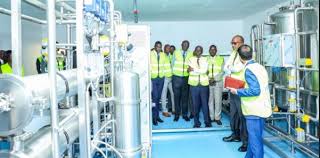
Kenya is on course to start producing its own vaccines locally, with the first batch expected by the end of 2027. This major step is being driven by the Kenya BioVax Institute, a government-owned company established to strengthen the country’s health security and reduce reliance on imported vaccines.
The government-funded vaccine manufacturing plant has already completed its first phase. The second phase is now underway and involves installing critical equipment and integrating systems, including advanced technology for filling and finishing vaccines.
Health Cabinet Secretary Aden Duale shared this update during a meeting with the board and senior management of the Kenya BioVax Institute. He said local vaccine production is a key part of achieving universal health coverage and ensuring Kenya is better prepared for public health emergencies.
The Kenya BioVax Institute was created in 2021 to manufacture, package, and distribute vaccines and other essential health products for Kenya and the wider region. Its establishment was motivated by lessons from the Covid-19 pandemic, which exposed the risks of depending heavily on imported vaccines.
Kenya has also reached an important milestone by attaining World Health Organisation (WHO) Maturity Level 3. This global regulatory standard shows that the country has strong systems to regulate and assure the quality of medical products. The achievement was supported by the Pharmacy and Poisons Board and the National Quality Control Laboratory.
According to CS Duale, this progress boosts confidence in Kenya’s pharmaceutical sector, supports universal health coverage, and positions the country as a growing pharmaceutical manufacturing hub in Africa. It also contributes to economic growth under the government’s Bottom-Up Economic Transformation Agenda.
The Kenya BioVax Institute will receive support from the World Bank through a regional programme focused on health emergency preparedness and strengthening pharmaceutical production capacity.
Initial vaccines planned for local production include those for typhoid and pneumonia, which mainly affect children. In the future, the institute also plans to produce vaccines for tetanus, hepatitis B, polio, cholera, Ebola, and other critical diseases.
Beyond vaccines, the institute aims to manufacture other medical products such as insulin, snake anti-venom, medical infusions, biosimilar medicines, and diagnostic tools. These products are expected to improve access to affordable and quality healthcare in Kenya and across the region.
The institute is also working closely with research organisations like the Kenya Medical Research Institute (KEMRI) to support vaccine development and build local expertise.
Overall, Kenya’s move toward local vaccine production is expected to improve health security, ensure fair access to life-saving medicines, and reduce the country’s dependence on foreign suppliers in the years ahead.