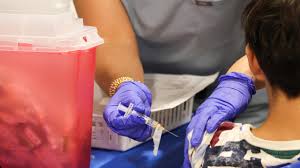
The United States has announced a major change to its childhood vaccination policy, with the government now recommending fewer routine vaccines for children.
Under the new guidelines released on Monday, the US health department said some vaccines will no longer be required for all children. Instead, immunizations against diseases such as rotavirus, influenza, hepatitis A, hepatitis B, and meningococcal disease will be given mainly to high-risk children or when parents and doctors agree they are necessary.
Previously, the Centers for Disease Control and Prevention (CDC) recommended 17 vaccines for all children. That number has now been reduced to 11. The CDC had already applied a similar approach to Covid-19 vaccines in 2025.
The changes were announced under the leadership of Health Secretary Robert F. Kennedy Jr., a long-time critic of vaccines. President Donald Trump praised the move, saying it supports parental choice and what he called “common-sense reforms.”
The administration said the decision followed a review comparing the US vaccine schedule with those of other countries, especially Denmark. Officials argued that the new policy aligns the US more closely with international practices and promotes transparency and informed consent.
However, medical experts and public health officials have strongly criticised the move. The American Academy of Pediatrics warned that the US vaccine schedule has long been based on strong scientific evidence and has saved many lives by preventing serious diseases.
Health experts also cautioned that reducing routine vaccinations could increase confusion among parents and doctors and lead to lower vaccination rates. Some warned this could result in the return of preventable diseases.
Despite the changes, US officials said vaccines will still be available and covered by insurance at no cost. States will also continue to decide their own vaccination requirements.
Public health authorities have urged parents to seek medical advice and rely on scientific evidence when making decisions about their children’s health.