Somaliland erupted in celebration over the weekend after Israel became the first country to formally recognise the self-declared republic’s statehood, a landmark diplomatic breakthrough that was swiftly met with fierce condemnation from Somalia and unease across the region.
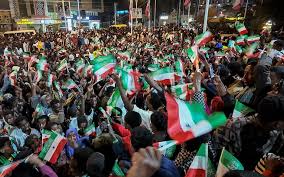
Thousands of people poured into the streets of Hargeisa, Somaliland’s capital, and other major towns on Sunday, waving the green, white and red Somaliland flag and chanting slogans of victory. A packed stadium in Hargeisa became the focal point of the celebrations, as Somaliland’s flag was raised alongside Israel’s in a ceremony broadcast live on local television.
“This is a historic moment we have waited for since 1991,” said Shamis Mohamed, a resident of Hargeisa. “I have not slept since the announcement. People feel that our struggle to be recognised has finally been heard.”
Israel announced on Friday that it was officially recognising Somaliland, more than three decades after the territory declared independence from Somalia following the collapse of the central government. Despite maintaining its own currency, passport, elected government and security forces, Somaliland has remained diplomatically isolated, with no prior formal recognition from any UN member state.
Somaliland’s foreign ministry described Israel’s move as a “bold and historic decision,” saying it validated the region’s long-standing claim to sovereignty and its record of relative peace and democratic governance in a volatile region.
The celebrations, however, stood in sharp contrast to the reaction in Mogadishu. Somali President Hassan Sheikh Mohamud convened an emergency parliamentary session, denouncing Israel’s decision as a “blunt aggression” against Somalia’s sovereignty and territorial integrity.
“This reckless violation threatens the stability of the Horn of Africa and undermines international law,” Mohamud told lawmakers, accusing Israel’s leadership of attempting to fragment the Somali Republic.
Somalia insists that Somaliland remains an integral part of its territory, a position supported by the African Union, the United Nations and most of the international community. Several regional and international actors — including the African Union, Egypt, Turkey, the Gulf Cooperation Council, the Organisation of Islamic Cooperation and the European Union — criticised Israel’s move and reiterated their support for Somalia’s unity.
Analysts say Israel’s recognition is driven by both geopolitical and security considerations. Somaliland sits along the strategic Gulf of Aden, one of the world’s busiest shipping lanes, and recognition could give Israel greater diplomatic and logistical reach near the Red Sea. Israel has previously launched strikes against Iran-backed Houthi rebels in Yemen following attacks linked to the Gaza war that erupted in October 2023.
The decision has also revived reports that Somaliland was among territories considered as potential hosts for Palestinians displaced from Gaza — claims neither Israel nor Somaliland have officially confirmed. President Mohamud rejected the idea outright, saying Somalia would never accept the forced relocation of Palestinians “to a faraway place.”
Seeking to calm regional fears, Somaliland’s Minister of the Presidency, Khadar Hussein Abdi, said Israel’s recognition would not destabilise the region. “This partnership will not bring violence or conflict,” he told crowds in Hargeisa. “It will help Somaliland improve its economy, agriculture, water resources and international partnerships.”
Local officials confirmed that celebrations were also held in Burao and Gebiley, reflecting widespread public enthusiasm across the territory.
For Somaliland, Israel’s recognition marks a symbolic breakthrough after decades on the diplomatic margins. For the Horn of Africa, it opens a new chapter of political tension, with far-reaching implications for regional stability, international law and the future of one of Africa’s longest-running sovereignty disputes.