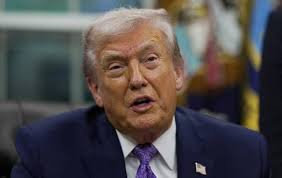
US President Donald Trump has expanded a travel ban, stopping people from seven more countries and Palestinian Authority passport holders from entering the United States.
The announcement was made on Tuesday through a White House proclamation. With this new decision, almost 40 countries now face full or partial restrictions on travel to the US based only on nationality. The ban affects people from parts of Africa, the Middle East, Asia, and the Caribbean.
The White House said the ban targets foreigners who may threaten the safety of Americans or harm US culture, government, and institutions. Trump has defended the move as a security measure, saying it is needed to protect the country.
Among the countries newly added to the full travel ban are Syria, Burkina Faso, Mali, Niger, Sierra Leone, South Sudan, and Laos. Syrians were added shortly after an attack in Syria that killed two US soldiers and a civilian. Syrian authorities later said the attacker was a security officer with extremist views who was about to be dismissed.
The Trump administration has also formally blocked Palestinian Authority passport holders. This follows earlier informal restrictions and comes as the US shows strong support for Israel, especially after some Western countries moved to recognize a Palestinian state.
In addition to full bans, the US imposed partial travel restrictions on several other countries. These include Nigeria, Ivory Coast, Senegal, Angola, Tanzania, Zambia, Zimbabwe, and others in Africa and the Caribbean, as well as the Pacific nation of Tonga. Partial restrictions may limit visas for work, study, or tourism.
Although some of these countries, such as Senegal and Zambia, are close US partners and supporters of democracy, they were still affected by the new rules. The US government said athletes will be allowed to enter the country for the 2026 World Cup, which will be hosted by the US, Canada, and Mexico, but no clear plan has been given for fans from banned countries.
Human rights and refugee groups strongly criticized the decision. Global Refuge, a Christian organization that helps refugees, warned that the ban would harm vulnerable people. Its leader said the policy unfairly punishes entire populations instead of using individual background checks.
Trump has continued to use harsh language about immigrants, often targeting non-white countries. He has previously insulted African nations and made controversial remarks about immigrants from Somalia. Somalia remains on the full travel ban list.
Other countries still facing a full ban include Afghanistan, Iran, Haiti, Libya, Sudan, Yemen, and several others. Trump recently ended a special program that allowed Afghan allies who helped US forces to settle in America.
The White House said one country, Turkmenistan, has shown improvement and its citizens can now apply for non-immigrant visas.
Trump has also almost completely stopped refugee admissions, with the US now mainly accepting refugees from South Africa’s white Afrikaner minority.
The expanded travel ban marks another major step in Trump’s tough immigration policy, which has become a key part of his presidency and continues to spark strong debate at home and abroad.