The United Nations has urged Ethiopia and Eritrea to respect each other’s sovereignty and territorial integrity, expressing concern over renewed tensions between the two Horn of Africa neighbours that have raised fears of another armed conflict.
In a statement issued on Friday, UN Secretary-General António Guterres called on both countries to recommit to the principles of the Algiers Agreement, the landmark 2000 peace accord that ended a devastating border war between 1998 and 2000 in which tens of thousands of people were killed. His spokesperson, Stéphane Dujarric, said the UN was alarmed by escalating rhetoric and mutual accusations that risk destabilising an already fragile region.
For several months, Addis Ababa and Asmara have traded accusations of hostile intent. Eritrea, which gained independence from Ethiopia in 1993 after a prolonged armed struggle, has accused its landlocked neighbour of harbouring ambitions to gain access to the Red Sea through Eritrea’s Assab port. Ethiopian authorities, on the other hand, have alleged that Eritrea is actively preparing for war and providing support to armed groups fighting against federal forces.
The two countries’ relationship has remained volatile since their border dispute was formally settled, with periodic flare-ups of tension. Fighting reignited most recently in Ethiopia’s northern Tigray region, which borders Eritrea and was the epicentre of a brutal conflict from 2020 to 2022. The war left large parts of the region devastated and is estimated to have claimed up to 600,000 lives.
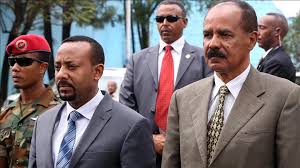
Ethiopian Prime Minister Abiy Ahmed, who came to power in 2018, was awarded the Nobel Peace Prize in 2019 for signing a historic peace deal with Eritrean President Isaias Afwerki, who has ruled Eritrea since 1993. The rapprochement raised hopes of lasting peace after decades of hostility.
However, relations have deteriorated again since the November 2022 peace agreement that ended the Tigray war. Although Ethiopia and Eritrea had previously fought alongside each other against the Tigray People’s Liberation Front (TPLF), Eritrea was not a signatory to the agreement between the Ethiopian government and the TPLF. Eritrean forces were also accused by human rights groups of widespread abuses during the conflict, allegations Asmara has repeatedly denied.
Against this backdrop, the UN has warned that any further escalation could undermine hard-won gains and deepen instability in the Horn of Africa. The Secretary-General urged both governments to de-escalate tensions, engage in dialogue, and uphold existing agreements in the interest of regional peace and security