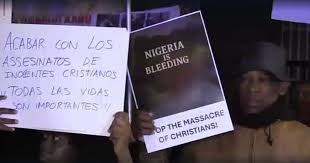
Hundreds of demonstrators gathered outside the Nigerian Embassy in Madrid, Spain, on Saturday to express solidarity with Christians and schoolchildren abducted in a recent surge of attacks in northern Nigeria.
The protest follows the kidnapping of more than 250 children from a Catholic school just over a week ago—one of the largest abductions the country has witnessed in years. The incident is part of a renewed wave of violence that has shaken communities across Nigeria and intensified fears about the country’s worsening security crisis.
Christiana Wariboko, President of the National Youth Council of Nigeria, addressed the crowd, calling for stronger intervention from international governments and aid organisations.
“We’re standing on behalf of Christians, representing Nigerian Christians,” she said. “Please intervene and do something as it regards the killings of Nigerian Christians.”
A Pattern of Mass Abductions
Nigeria has been hit by two separate mass kidnappings of schoolchildren in the past three weeks, along with a deadly attack on a church service. In another incident, gunmen stormed a predominantly Muslim school in Kebbi State, abducting 30 students before authorities secured their release.
Security analysts say the kidnappings—regardless of whether the victims are Christian or Muslim—are largely driven by profit, as armed groups target schools with weak security to demand ransom payments.
Since 2014, Nigeria has recorded at least a dozen major school abductions, with 1,799 students kidnapped in that period. While some are eventually rescued, many remain missing, leaving families in anguish.
Global Political Pressure
The attacks have drawn global attention, with U.S. President Donald Trump recently threatening military action in Nigeria, alleging widespread persecution of Christians by radical Islamist groups.
However, human rights experts caution that the narrative is more complex. They note that Boko Haram and other extremist factions have killed more Muslims than Christians, underscoring that the violence affects all communities.
Nigeria’s government has rejected claims of targeted religious persecution, arguing that such statements oversimplify the situation and ignore ongoing efforts to protect all citizens.
Nigeria Declares State of Emergency
Amid mounting pressure, President Bola Tinubu declared a state of emergency last week and ordered the reinforcement of police units across the country to combat escalating attacks.
Authorities insist they are committed to safeguarding religious freedom and ending the cycle of violence. But for many Nigerians—both at home and abroad—the latest mass abductions highlight the urgent need for stronger action.
As protests continue in Madrid and other cities, demonstrators say they are determined to keep the spotlight on the plight of Nigeria’s kidnapped children and the communities torn apart by insecurity.