In many parts of the world and particularly in sub-Saharan Africa young women and girls face unique vulnerabilities when it comes to HIV infection.
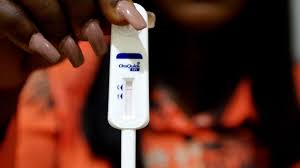
One of the most promising tools to address this is the HIV self-testing strip (also called HIV self-test kits). Yet awareness and use of these tools among girls remains unacceptably low.
Here’s a fuller, refined story explaining why this matters, what the obstacles are, and what can be done to close the gap.
The Situation: girls at risk, yet testing lags
Research shows that while HIV self-testing is increasingly available, its uptake among women—and especially younger girls is far below what is needed.
For example, a recent study across 21 sub-Saharan African (SSA) countries found that knowledge and use of HIV self-testing among women was extremely low (only about 2.17% knew about it and used it) despite these women facing substantial risk.
In Uganda, for instance, public health programmes working in districts like Hoima, Nakaseke and Buikwe note that although interventions are in place, the rate of HIV infection among youth is rising. One district official commented that:
“It can be easy for a boy child to buy a condom and move with it, but it may not be easy for a girl child to go to any pharmacy to ask for a condom. It can be easy for a girl child to buy HIV testing strips and move with them.”
Thus, self-testing strips may offer a realistic and discreet option for girls—but only if they know about them and feel able to use them.
Why the focus on girls matters
1. Biological and social vulnerabilities. Girls and young women often face higher risk of HIV due to gender power imbalances, sexual exploitation, age-disparate relationships, and lack of access to prevention services. The Uganda campaign noted rising HIV prevalence in youth in high-risk districts.
2. Barriers to traditional testing. However, girls often encounter significant obstacles to HIV testing in clinic settings: stigma, fear of being judged, logistical or travel challenges, dependency on adults, and lack of privacy. By contrast, self-testing strips enable testing in private, at a time and place the user chooses. The World Health Organization recognised this in its 2016 guidance on self-testing.
3. Critical link to prevention and care. Knowing one’s HIV status is the gateway to treatment for those positive (which helps reduce transmission) and to prevention options (such as PrEP) for those negative. Self-testing can boost those linkages. For women in Canada, for example, a project found that a large share (40%) of cis-women ordering self-tests had never been tested before.
What is holding girls back
• Lack of awareness. Many girls simply don’t know that self-testing strips exist or how to access and use them. The large SSA-wide study found extremely low knowledge among women.
• Education and socio-economic gaps. The same study found that women with higher education, media exposure, urban residence, and higher wealth were more likely to know about and use self-testing kits. Which means girls from poorer, rural, less educated backgrounds are being left behind.
• Stigma and privacy concerns. Girls may be reluctant to seek services publicly, or may fear disclosure of their test result, or face judgment from family/partners. Self-testing helps, but only when the distribution and support system addresses these concerns.
• Linkage to care. A self-test is only part of the story—without confirmatory testing, counselling, and access to treatment/prevention, the full benefit is lost. Studies highlight that self-testing must be paired with effective linkage.
What must be done: building awareness and access for girls
• Target awareness campaigns to girls and young women. Use schools, youth centres, peer networks, and social media to inform girls about self-testing kits: what they are, how to use them, where to get them, and what steps to take after.
• Ensure discreet and youth-friendly access. Kits should be available in places that girls can access privately (e.g., pharmacies, youth health offices, peer-led distribution), ideally at low or no cost.
• Link testing to support services. It’s vital that self-testing programmes have dedicated pathways to counselling, confirmatory testing, treatment, and prevention services (such as PrEP).
• Address inequalities. Special focus on girls in rural/outlying areas, those with less education or in lower income brackets so that gaps do not widen.
• Monitor and evaluate. Collect data on how many girls are using self-testing kits, what outcomes follow, and what barriers still remain—so interventions can be refined.
Girls need more awareness about HIV self-testing strips not just because it is a health innovation—but because it is a practical tool that can overcome many of the barriers they face.
When girls know their HIV status early, they are empowered: those who are positive can link to life-saving treatment and reduce onward transmission; those who are negative can make informed decisions about prevention. Ensuring that girls know about, can access, and trust self-testing is a crucial step in the fight to end HIV.