Experts and industry leaders have called on the Ugandan government to reduce taxes on smartphones and shift focus from expanding network coverage to increasing internet use and affordability, in an effort to close the country’s growing digital divide.
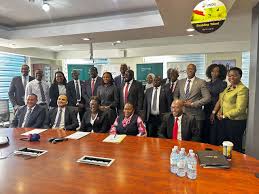
The call was made during the inaugural Digital Africa Summit held in Kampala, where policymakers, telecom operators, and global technology organizations gathered to discuss Africa’s digital future.
A new report by GSMA Africa — launched at the summit — revealed that 96% of Ugandans already live within 3G or 4G network coverage, yet 74% of them have never used the internet.
According to Angela Wamola, Head of GSMA Africa, Uganda has achieved remarkable progress in expanding broadband coverage, growing from 50% to 96% in the last decade. However, she warned that access alone is not enough if citizens cannot afford to connect.
“Uganda’s network coverage is impressive, but a significant usage gap remains,” Wamola said.
“Many people already have phones but can’t go online due to high data costs, lack of local content, and limited digital skills.”
The report highlighted that the cheapest smartphone in Uganda costs between $38 and $40, roughly 39% of the country’s GDP per capita and nearly all the income of the poorest households.
Out of that cost, 35% comes from taxes. GSMA recommends that Uganda remove taxes on entry-level smartphones and target prices between $20 and $30 (Shs 69,000–104,000) to make internet access more affordable.
Caroline Mbugua, GSMA’s Senior Director of Policy, urged policymakers to focus on population coverage rather than expanding geographical coverage.
“Reaching 90% of Uganda’s land area with broadband would cost about $500 million and require 1,400 new sites,” she explained.
“But increasing population coverage from 96% to 99% would cost only $15 million — a much more efficient investment.”
Uganda Communications Commission (UCC) Executive Director Nyombi Thembo welcomed the report, praising the private sector for its role in growing Uganda’s telecom industry.
“Twenty-five years ago, Uganda had fewer than 50,000 phone lines. Today we have over 40 million subscribers,” Thembo noted.
“But having connectivity is one thing — using it is another. Without affordable devices, many Ugandans will remain offline.”
Thembo also emphasized the need for policies that encourage innovation and affordability, rather than restrictive regulations that discourage investment.
State Minister for ICT Godfrey Kabyanga said the government is reviewing digital policies and remains open to reforms that promote digital inclusion.
“Our goal is a Uganda where digital transformation is not just a dream but a daily reality,” he said.
Representatives from MTN Uganda and Airtel Uganda also attended the summit.
MTN Uganda CEO Sylvia Mulinge urged both GSMA and the government to create supportive policies that would help increase smartphone penetration to at least 70% nationwide.
The GSMA report further recommends reducing excise duties on mobile services, extending telecom licenses from 5 to 20 years, and expanding rural electricity to support telecom infrastructure.
Uganda’s digital growth story shows strong progress in connectivity but a deep challenge in usage. Experts agree that making smartphones cheaper, data more affordable, and citizens more digitally skilled will be key to ensuring that every Ugandan benefits from the country’s digital transformation.