Uganda and Kenya have taken major steps to deepen their tourism partnership, marking a new chapter in East Africa’s journey toward regional travel integration.
The two countries are working together to promote shared destinations, digital innovation, and youth-driven tourism opportunities under a unified East African tourism vision.
The collaboration was reaffirmed during the Coast Tourism Conference held in Malindi, Kenya, from October 27–28, 2025, at the Ocean Beach Resort and Spa.
The event, attended by hundreds of tourism leaders, investors, and policymakers, was the first of its kind to link Uganda’s inland attractions with Kenya’s coastal tourism experiences.
Since 2022, Uganda’s Consulate in Mombasa has played a leading role in strengthening tourism diplomacy, positioning Uganda as a key driver of regional cooperation.
The partnership emphasizes collaboration rather than competition, creating joint opportunities for growth across both nations.
According to 2024 data, 466,000 Kenyans visited Uganda, while 225,559 Ugandans traveled to Kenya, making the two nations each other’s largest African tourism markets. Officials say this strong interdependence now serves as a model for wider East African integration.
At the conference, Uganda Tourism Board (UTB) CEO Juliana Kaggwa presented Uganda’s long-term Tourism Development Vision 2040, which focuses on tenfold growth through digital innovation, youth engagement, and sustainable investments.
Kaggwa called for a unified digital tourism ecosystem linking Uganda’s wildlife and adventure tourism with Kenya’s coastal leisure offerings.
She stressed that technology can help travelers plan multi-country trips more easily and boost regional revenue.
Uganda’s State Minister for Tourism, Wildlife and Antiquities, Martin Mugarra Bahinduka, reaffirmed the government’s dedication to regional cooperation.
“This platform is vital for expanding opportunities between our two sister nations. By combining Uganda’s adventure and wildlife experiences with Kenya’s beaches, we can build a powerful tourism circuit that appeals to global travelers,” he said.
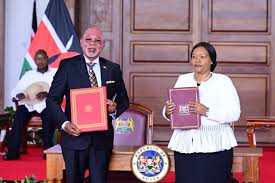
The conference concluded with a joint declaration outlining several key commitments:
• Using digital branding and AI in tourism marketing
• Linking Uganda’s inland safaris with Kenya’s coastal experiences through new agreements
• Empowering youth as tourism innovators and service providers
• Ensuring inclusive tourism that integrates persons with disabilities
• Creating a regional online tourism marketplace and making the event an annual Uganda–Kenya Tourism Conference
Kenya’s Ministry of Tourism announced plans to expand its traditional coastal campaign—centered on Mombasa, Diani, and Kilifi—to include inland heritage, cultural, and eco-adventure experiences.
The shift reflects the growing demand for authentic and sustainable tourism that goes beyond beaches and resorts.
By linking coastal charm with inland adventure, Kenya aims to increase average tourist stays, boost local economies, and strengthen its role as a gateway to East Africa.
Uganda’s Consul General in Mombasa, Paul Mukumbya, praised the progress achieved through strong cooperation and consistent engagement.
Since the partnership’s launch, participation in the annual conference has grown from 200 delegates in 2022 to over 700 in 2025, showing the growing confidence in Uganda’s leadership.
The Consulate has also introduced joint tourism packages, including bush-to-beach experiences, golf tournaments, and familiarization trips connecting the two countries’ attractions.
The next Uganda–Kenya Tourism Conference will be hosted in Kampala in 2026, focusing on key issues such as infrastructure development, improved air and road connectivity, and partnerships with digital content creators and technology firms.
This future-focused approach aims to position East Africa as a united global tourism destination, promoting both sustainability and innovation.
The success of the Malindi conference and the Malindi Declaration marks the start of a new era of regional collaboration.
Uganda and Kenya’s joint vision demonstrates that with shared goals and coordinated marketing, the region can offer travelers richer, more diverse experiences — from Uganda’s wildlife parks and cultural trails to Kenya’s iconic beaches and heritage sites.
Together, the two nations are redefining African tourism — embracing technology, inclusion, and unity to build a more sustainable and connected future for all.