By John Kourkoutas, Managing Director, MrExportToAfrica
Most writing about African business opportunity is done from altitude.
Population curves, urbanisation rates, a middle class arriving on
schedule. All of it is true and almost none of it tells you what to do
on Monday morning.
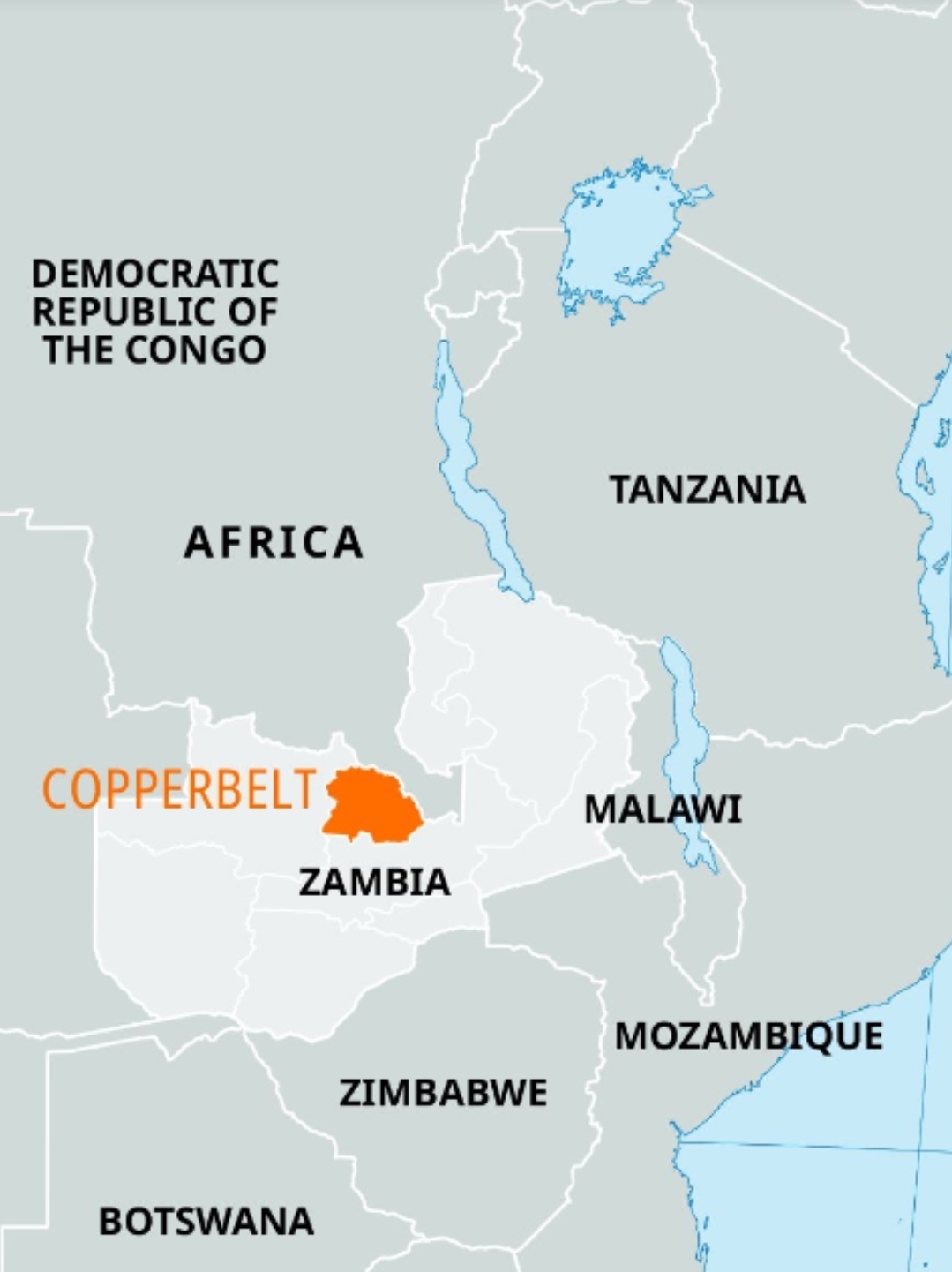
So here is one market from ground level. The Zambian Copperbelt, the
mining belt in the north of the country around Ndola and Kitwe, where we
run distribution and where I have spent years watching goods actually
move. What follows is not a forecast. It is how the trade works.
Demand arrives as a phone call
Nobody in this market issues a tender for consumer goods. Demand shows
up as a wholesaler ringing round because his usual supplier has raised
his price, run short, or sent a batch that failed.
I learned this selling friction products, brake pads, into the region.
The moment we could sell was never a procurement decision. It was a
haulage operator finding that pads rated perfectly well on paper were
wearing out in weeks on Copperbelt routes, loaded trucks, long grades,
dust. That complaint travelled to the wholesaler, and the wholesaler
started asking around. That window is where the business is, and it
stays open for a few weeks.
If you are not already in the conversation when it opens, you do not
hear about it at all. This is the single hardest thing to explain to a
company sitting in Europe or the United States waiting for enquiries to
arrive.
The distributor is not a channel, he is the business
Outside Africa, “distribution” suggests warehouses, fleets, a route to
market you can buy. Here it means something different and more human.
One importer brings in a container. He sells to dozens of smaller
traders, most of them on credit, no paperwork worth the name. Those
traders supply the shops and the market stalls. That chain of credit,
extended on the basis of who somebody’s father was and whether he paid
last time, is the distribution system. It is not owned by anyone. It
cannot be bought.
Which means your market share is decided by one thing: whether the
importer who takes your line pushes it, or files it behind the three
competing lines already in his warehouse. Most foreign entrants get this
wrong by appointing the first company that answers their email, usually
the biggest importer they can find, for whom their product becomes item
four hundred on a shelf.
The correct move is nearly the opposite. Find the trader who is hungry,
who has the sub-trader relationships in the specific towns you care
about, and who has a reason to make your line work. Then be present. Not
present as in a quarterly visit. Present as in someone who answers the
phone at eleven at night when a consignment is stuck at a weighbridge.
That is why we hold a physical operation in Ndola rather than servicing
Zambia from Athens. There is no remote version of this.
Money is the constraint, not price
Two things surprise newcomers.
The first is that your customer’s problem is usually not your price. It
is getting hard currency out at all. In a tight quarter for the kwacha,
an importer with a signed order and a cooperative bank still cannot move
dollars on the day he said he would. Payment slips by weeks. Nothing in
the contract predicts it, and treating it as bad faith is the fastest
way to lose a good partner.
The second is that letters of credit, which every export textbook treats
as the default, are talked about far more than they are used. The
confirmation cost is high, the documentary discipline assumed by the
instrument is not how mid-sized traders operate, and insisting on
LC-only quietly empties your pipeline. Most real trade settles on
advance payment, part advance with the balance against shipping
documents, or open account once you have known each other for a few years.
Where technology has actually changed things, and where it has not
This is the part usually oversold, so let me be exact.
Mobile money genuinely transformed the bottom of the market. Collection
from small traders and consumers, once a cash-handling problem with real
physical risk, is now a phone transaction. That is not a small thing. It
changed who can trade at all.
It has not changed the top. Wallet and transaction ceilings sit far
below the value of a container, so mobile money is the last mile of
retail collection, not business-to-business settlement. Anyone telling
you Africa’s cross-border trade payments have been solved by mobile
money is describing a market they have not moved goods in.
The bigger practical change is duller and nobody writes about it.
WhatsApp. Order taking, price lists, photographs of damaged stock, proof
of delivery, the entire commercial conversation between importer,
sub-trader and shop now runs through it. Trade documentation has gone
digital in more countries, which shortens some border procedures. Truck
and load matching platforms are slowly making it easier to fill a
returning empty vehicle, which matters more than it sounds, because a
truck going back empty prices its outbound run to cover both legs.
None of that removed the credit web. It made it faster.
What I would tell someone looking at this market
Go and look. There is no dataset that substitutes for standing in a
wholesale yard in Ndola and asking three traders what they reorder and
why. Official import statistics record what clears customs under a
declared code at a declared value, and a very large share of regional
commerce does neither, so the numbers you would build a business case on
are the least reliable input you have.
Solve one specific problem for one specific trade. Brake pads that
survive the routes. A product that arrives in the pack size the market
actually buys. Terms that survive a bad currency quarter. Opportunity
here is not a sector, it is a defect in how something currently reaches
the customer.
Assume it takes longer than you planned and that the relationship is the
asset. The traders who move volume on the Copperbelt have been
approached by many foreign suppliers. Most of those suppliers
disappeared after two difficult quarters. Being the one who did not is,
more often than people want to hear, the whole competitive advantage.
For the diaspora reader in particular, there is a real edge available.
You can already read the market socially, which is the part outsiders
cannot buy. What usually goes missing is the operating end: presence on
the ground, patience with payment, and a willingness to build the trader
relationship rather than the brand deck.