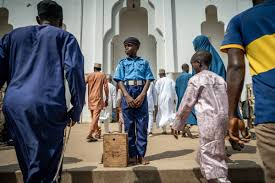
Nigerian authorities have secured the release of 100 schoolchildren who were abducted last month from a Catholic school in the north-central Niger state.
The children were freed after being held captive for more than a week by gunmen who attacked St. Mary’s Co-educational Boarding School in late November.
According to a United Nations source and local media reports, the children arrived in the capital, Abuja, and are set to be handed over to the Niger State government on Monday, December 8, 2025.
However, the fate of the remaining 165 students and staff, who are still believed to be in captivity, remains uncertain.
The abduction, which involved a total of 315 students and staff members, is part of a broader wave of mass kidnappings that have plagued Nigeria in recent years.
Although 50 of the captives managed to escape shortly after the attack, 265 remained in the hands of the kidnappers. As of now, it is unclear how the 100 children were released—whether through negotiations or military intervention.
This mass abduction comes at a time when Nigeria is grappling with a serious kidnapping crisis. While kidnappings for ransom have long been a problem, the recent surge in mass abductions—especially targeting schools—has escalated the nation’s security challenges.
In November, 2025, alone, dozens of people were taken hostage, including Muslim schoolgirls, church worshippers, and even a bride and her bridesmaids.
The growing prevalence of these kidnappings is driven by a criminal industry that profits from ransom payments. A report from the Lagos-based consultancy SBM Intelligence revealed that this “kidnap-for-ransom” industry earned over $1.66 million between July 2024 and June 2025.
The abduction of the schoolchildren follows a turbulent period for Nigeria, which has been the subject of international diplomatic pressure. Recently, U.S. President Donald Trump made headlines by accusing the Nigerian government of enabling a “genocide” against Christians and threatening military intervention.
While Nigerian officials have rejected this characterization, the country remains caught in the crossfire of multiple internal conflicts, including jihadist insurgencies in the northeast and escalating violence from bandit groups in the northwest.
Some analysts worry that the rhetoric from the U.S. may embolden armed groups, who might see the threat of U.S. military action as an opportunity to strengthen their positions.
Security analysts have reported that U.S. observation flights are increasingly frequent over known jihadist strongholds in northern Nigeria.
Nigeria’s mass abductions are not new. One of the most infamous cases occurred in 2014 when Boko Haram militants kidnapped nearly 300 schoolgirls from Chibok, an event that drew international outrage.
Since then, abductions have become a frequent feature of the Nigerian landscape, often linked to the country’s ongoing struggle with armed groups like Boko Haram and various bandit factions.
Despite the release of 100 children, many questions remain unanswered about the remaining captives. Local authorities, including the Nigerian state and federal government, have faced increasing criticism for their inability to curb the growing kidnapping crisis, which has affected thousands of Nigerians across the country.